Onewheel: patenting for category ownership
Future Motion built a five-layer patent portfolio to own the one-wheeled board category, from pioneer claims on the concept to design patents on every fender. It has kept copies out of the US, but its recent wins have come by default, and the coverage thins abroad and after 2034.

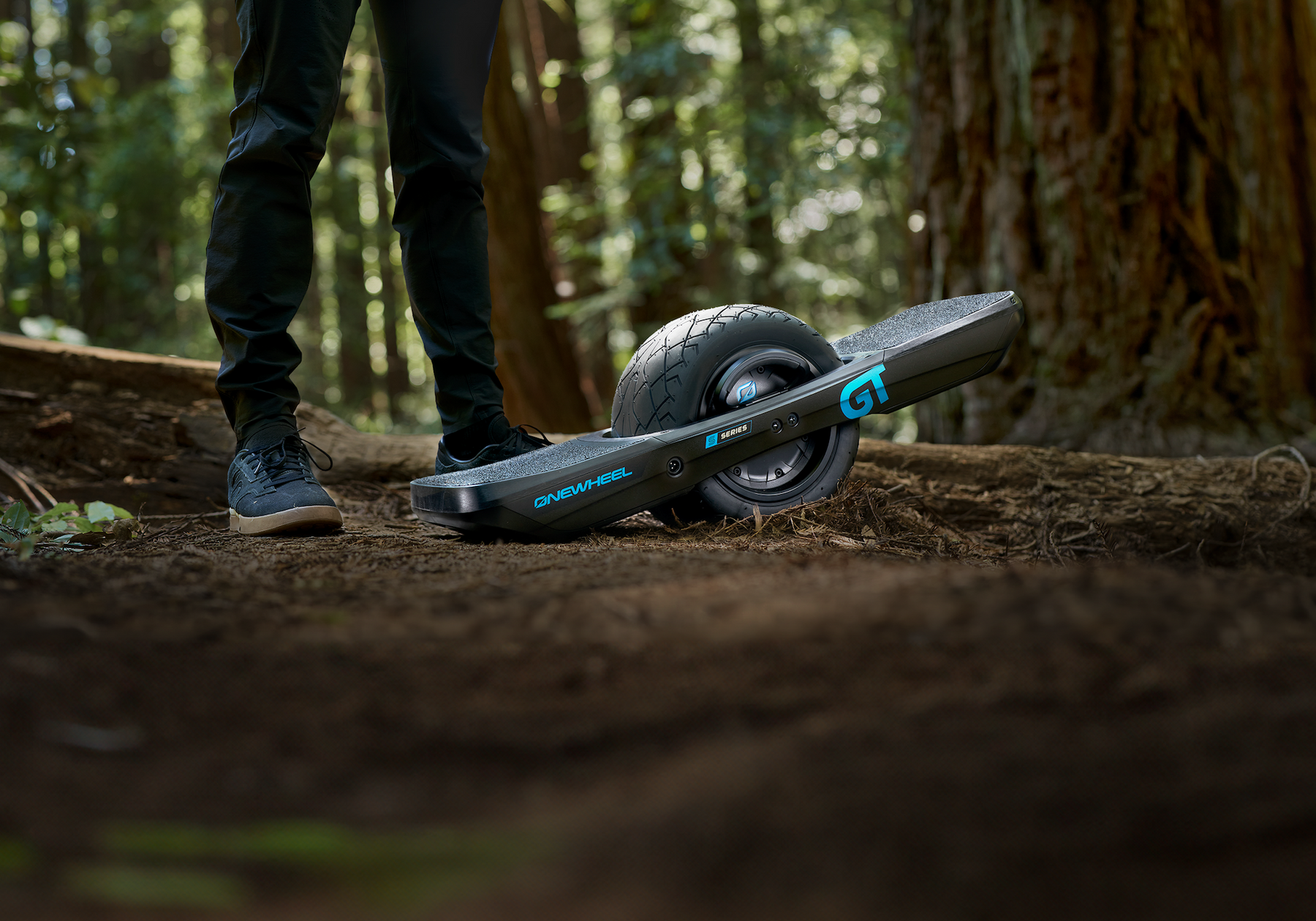
Future Motion did not just patent its Onewheel board. Patents were filed to own the entire category the Onewheel created: one-wheeled, self-balancing boards that move as the rider shifts their weight. First released in 2014, and developed by Kyle Doerksen in Santa Cruz on the back of a Kickstarter campaign.
An analysis of their portfolio reveals that Future Motion deployed in effect a five layered patent strategy. Future Motion progressively built successive layers of protection around their product and category. Each layer closes a different route a competitor might take into the market, from copying the concept to selling a cheaper fender. Each product launch was protected. While it is a painstaking work to develop that depth of patent protection, the simple strategy has also paid dividends as so far blocking competitors.
Future Motion owns patents worldwide, but protection is concentrated in the United States. Coverage in the United States also shows the most coherent expression of their strategy. This makes sense: the United States is the home market, and a single concentrated and valuable market. Also, prospective competitors that are effectively locked out of the United States market are unlikely to prosper in a way that would represent a genuine competitive threat to Future Motion.
Given the centrality of the United States to their strategy it makes sense to focus only on the United States patenting activity to get a clearer look at the strategy and intent behind their patent protection.
The five layers at a glance
The layers run in the following order: from the broadest claim inward to the smallest part, then outward to neighbouring vehicles.
- 1. Category patents — the 2013 self-stabilising skateboard family. Closes: copying the concept. 5 US grants, 5 marked on a product.
- 2. Subsystem patents — rider detection, hub motor, dismount, suspension, controls, rider warnings. Closes: designing around the concept. 44 US grants, 24 marked.
- 3. Model design patents — the look of each board. Closes: look-alike boards. 13 US design patents, all marked.
- 4. Parts and accessories patents — fenders, bumpers, rails, footpads, tyres, handle. Closes: third-party parts. 32 US grants and designs, 31 marked.
- 5. Adjacent vehicles — tilting three-wheeler, motorised scooters. Closes: neighbouring categories. 6 US grants and designs, none marked.
What's interesting is the strategy naturally evolved as Future Motion evolved. Timing shifts across the layers. From 2013 to 2017, new filings were mostly layers 1 and 2: how the board works. From 2019, most new protection sits in layers 3 and 4: how each model and the parts looks. Progression of that sort is expected: early patenting lays the foundations, and later patenting consolidates the walls.
One small note in the above: the US usage umps together patents and designs as 'utility patents' and design patents'.
Layer 1: patenting the category
The anchor is one patent family with a priority date of 6 May 2013. Founder Kyle Doerksen filed the first non-provisional application on 30 April 2014. It issued as US 9,101,817, "Self-stabilizing skateboard", in August 2015. Four more US grants followed in the same patent family, including US 9,400,505 in 2016.
Future Motion treats this family as covering a class of vehicle, not one product. At the US International Trade Commission it asserted the '505 patent alone against "one-wheeled, self-balancing electric skateboards that move in response to a rider's weight distribution on the board" (Federal Register).
There is a Future Motion virtual patent marking page that index the US patents against their products. Every Onewheel model on the patent marking page lists at least four of the five patents in this family; the fifth, granted in 2018, appears from the Pint onward. It is the one layer that applies to everything Future Motion sells, and the layer most directly aimed at the product concept itself.
Layer 2: patents for every subsystem
Between 2014 and 2017, Future Motion opened a separate patent family for each system that makes the board work. Each was then extended with continuations, so later claims could be drafted against what competitors actually built.
- Rider detection (footpad sensor) — first priority Nov 2014; 5 US grants
- Thermally enhanced hub motor — first priority Mar 2016; 4 US grants
- Strain-gauge rider controls (3 families) — first priority Jun 2016; 6 US grants
- Suspension — first priority Oct 2016; 11 US grants
- Dismount controls — first priority Dec 2017; 4 US grants
- Motor control systems — first priority Dec 2017; 2 US grants
The logic is simple. A competitor who is (somehow?) able to designs around the category patents has to comes up against second-order challenges. Problems like detecting the rider, keeping the motor cool, and letting the rider step off safely. Each of those problems has its own patents covering the solutions. So a perseverant challenger has to design around these patents as well. The difficulty level ramps up.
The layer is still growing, now in smaller steps. US 12,545,351, with a September 2023 priority date, covers warning the rider through vibrations produced by the motor itself. In 2023, Future Motion also recalled about 300,000 boards and pushed a "Haptic Buzz" warning to them by firmware update (CPSC).
Layer 2 also has a hidden blocking element. Of its 44 subsystem patents, 20 are not marked on any product. Most cover suspension (11 grants) and strain-gauge rider controls, neither of which the marking page ties to a current board. These patents do not protect sales. So why bother? Because they either fence off alternative routes into the category, such as a suspended or strain-sensing one-wheeler, or hold ground for products Future Motion has not launched.
Layer 3: a design for every model
Each new board platform, from the original to the GT, has its own US design patents. Later variants such as the Pint S and the GT S-Series list no new board designs of their own. The marking page ties the designs to products:
- Original Onewheel — D746,928; D769,997 (full-fender version)
- Onewheel+ — D821,517
- Onewheel+ XR — D843,532; D850,552
- Pint — D890,278 and related views
- Pint X — D1,008,392 and related views
- GT — D1,001,943 and related views
This layer does a different job from the utility patents. Utility patents cover how a board works, and a competitor can sometimes engineer around them. A design patent covers how the product looks. A rival that matches the Onewheel's silhouette, as the board seized at CES in 2016 reportedly did, faces a claim that turns on appearance rather than engineering. Copies are often designed to hijack the same look of the original product while having cheaper and inferior engineering underneath which can skirt around utility patent. A design patent proves its worth in this case.
Layer 4: design patent for every part
This is the layer that has grown fastest since 2019. Of the 41 US design patents in the dataset, 26 cover parts and accessories: fenders, bumpers, rail guards, footpads, a carry handle, two tyre treads, and "fender delete" covers for riders who remove the fender. Six utility patents add latching fenders, composite fenders, segmented siderails and the Fluid Stance footpad system (US 12,187,373).
The design filings arrive in launch batches:
- 11 March 2019 — 9 US design applications, 7 of them parts (Pint)
- 15 October 2021 — 19 US design applications, 14 of them parts (GT and Pint X)
Outside those two days, Future Motion rarely filed more than two designs at once. In both batches, the board and its replaceable parts were filed together, ahead of the platform reaching market.
This layer reaches past competing board makers to the aftermarket. A third-party seller of cheaper fenders and bumpers for Future Motion's own boards is a quieter threat than a rival board, and a design patent on the part itself is the most direct tool against it. The marking page lists 31 of the 32 parts patents against a product, so this layer protects what Future Motion actually sells.
Layer 5: patents for products that don't exist yet
The outer layer holds patents that cover no current Onewheel. Six US grants and designs cover adjacent vehicles: a tiltable three-wheeled chassis, control systems for tilting vehicles, and two motorised scooter designs. None is marked on a product. Interestingly, the tilting-vehicle patents have been assigned to another commercial entity Sway Motorsports LLC which was manufacturing these vehicles but has apparently since ceased.
Making the layers work: speed and marking
Two practices turn the patent layers into usable and practical rights.
The first is speed. Fourteen of the 59 US utility grants are issued before the application was ever published. Several were granted within three to seven months of filing. US 11,273,364 and US 11,299,059 were both filed on 20 October 2021 and granted by April 2022. That pace is consistent with prioritised examination, which puts an enforceable patent in hand while a product is still new. This could well be a tactic to deter fast copyists who quickly reverse engineer a new product while demand is high and sell before nay patent actually issues.
The second is marking. The virtual patent marking page that lists patents model by model and part by part gives constructive notice under 35 U.S.C. § 287(a), so damages can run from marking rather than from actual notice to an infringer. It also tells competitors exactly which patents stand behind each product so there is no excuse that they were not informed.
Where the layers thin
On this data, the category Future Motion owns is an American one. Outside the US, the dataset holds 22 grants and 13 utility models, spread over seven offices.
The gaps fall in the wrong places. Layer 1 has no European or Australian grant in the export. Outside the US it rests on Chinese and German utility models, which last at most ten years and have likely lapsed, plus one Taiwanese grant. The hub motor family, by contrast, holds seven foreign grants and utility models across China, Europe and Taiwan. Abroad, a rival can more easily copy the one-wheel idea than Future Motion's motor.
Layers 3 and 4 barely leave the US. Apart from UK registered designs on the marking page and two EU design registrations from 2024, the design patents are American. Australia has three Future Motion grants: rider detection, a 2019 board-improvements family, and suspension.
Then there is time. Layer 1 has a 2014 filing date, so it should expire around 2034, subject to any term adjustment. After that, the moat is the subsystem families and the design layers. Those are narrower, and the design layers protect what Future Motion sells more than they block what others might build.
What a launch team can take from this
The five layers transfer to any company creating a category, from personal mobility to automotive accessories.
- Claim the category before launch. Draft the broadest claims you can support, and keep a continuation/divisional patent applications open to refine the scope of protection later.
- Give every subsystem its own family. Claim the problems competitors must solve, not only your solution.
- Design-patent each platform. Appearance claims survive engineering workarounds and renew with every new model.
- Batch-file every replaceable part. File the board and its parts together before launch; designs are relatively cheap and reach the aftermarket.
- Hold ground beyond the product. Patent alternative designs and neighbouring adjacent products to retain optionality and prevent competitor ingress.
Then make them usable: buy speed where a launch depends on it, and keep a marking page current. File where competitors will manufacture and sell, not only where you sell first. And assume the first contested fight will come.
Assessing success: the litigation record
A layered portfolio is incredibly strong deterence, but the ultimate verdict arises in actual litigation record. Future Motion's record shows the layers work against copyists, and says little about how they would hold against a rival who fights.
- Jun 2025, D. Or. 3:23-cv-01742, v. Tony Lai (Floatwheel) — default judgment: permanent injunction on four asserted patents, including against posting information that induces infringement.
- Jun 2024, US ITC 337-TA-1386 — limited exclusion order against Floatwheel, found in default; the general exclusion order sought was not issued.
- Jan 2016, D. Nev., v. Changzhou First International Trade — seizure order executed by US Marshals at CES.
Three tests give a fair verdict.
- Has it excluded copies? Yes. Floatwheel's infringing boards are barred from US import, and the Oregon injunction even restricts what the defendant may publish online, a remedy that matters for a category with an active DIY community. The ITC case relied on layer 1 alone; the Oregon case drew on layer 2: rider detection, board improvements and the hub motor.
- Has it been tested? Not in the public record reviewed here. Both recent wins came by default. No court has construed the claims against a defendant arguing for a narrow reading, and no validity challenge is recorded. The outcomes for the other three ITC respondents are not covered here.
- Does it reach the whole category? Not yet. The ITC declined the category-wide ban Future Motion asked for, and the layers are thin outside the US.
The outcome: Future Motion built a thorough, layered portfolio for owning its category, and it has worked. One of the questions is whether or not Future Motion will exclusively hold the market beyond 2034 when critical patents start running out. By that time, the Onewheel market may not be sufficiently attractive to potential competitors, which will drawn to more dynamic prospects. Onewheel will in any event presumably be operationally strong and able to defend from copyists even without full portfolio coverage.