Platform power: Modern trade mark enforcement beyond the courtroom
A new era of IP enforcement is available via social media and e-commerce platforms for savvy IP owners who operate in the consumer products space. Online takedown options are developing in sophistication, and in some cases platforms will proactively monitor your rights.

Brand owners take note: any registered trade marks are now increasingly powerful as you have enforcement options through e-commerce and social media platforms. Platform enforcement is potentially fast, scalable and relatively inexpensive as a do-it-yourself proposition for brand owners. Filing a platform complaint shifts registered trade mark enforcement from a purely legal function to a hybrid legal-operational discipline.
Increasingly, brand enforcement happens inside digital platforms through the IP policies and supporting administrative systems operated by Amazon, eBay and others. This is particularly relevant of course of you operate in the consumer products field and face the predictable challenge of continuous waves of copycat products or brand hijacking.
How fast? A 24-48 hour turnaround for takedown is possible. And you can report multiple listings as they arise, and without a great time involvement operating within the platform's portal. You can feasibly move to take down hundreds of infringing listings at once. As well as take downs, you can pursue repeat infringers through escalated enforcement, including account suspension. This can really dampen the enthusiam of copyists, who are likely to turn their sights to products with less vigilent enforcement.
Traditional enforcement requires representation, with inevitable delay and expense. Platform enforcement, by contrast, is form-based and policy-driven. A brand owner submits a structured complaint through a platform portal, declares its rights, and the platform assesses whether the listing breaches its intellectual property policies.
Amazon currently leads the way in terms of sophistication, with other platforms following. Regardless, the sophistication of platform enforcement has been increasing slowly and surely in recent years.
Amazon
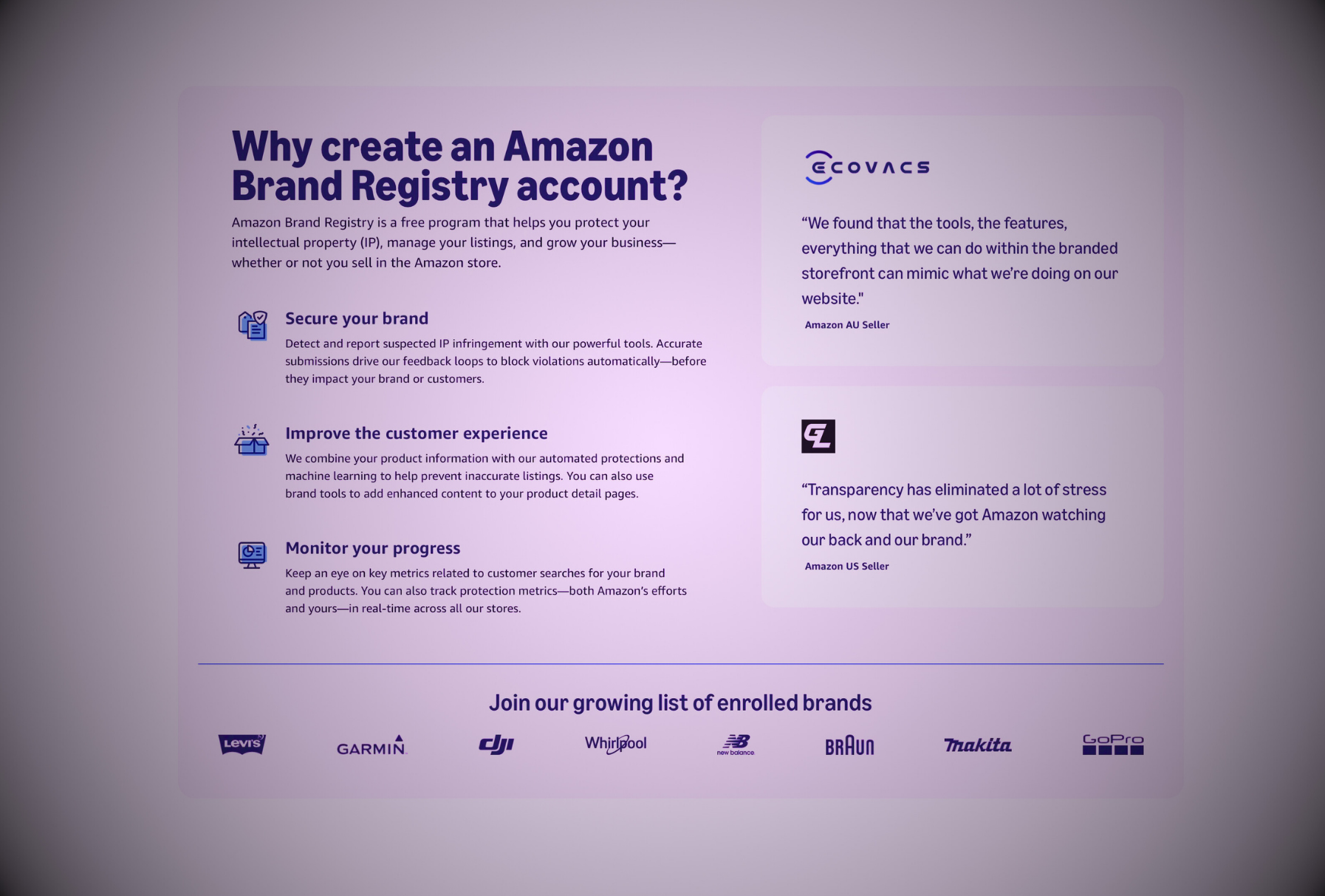
Amazon has developed one of the most sophisticated systems through its Brand Registry program, which requires a registered trademark and provides enrolled owners with enhanced enforcement tools. Brand Registry enables rapid listing removal, automated search functions, image-based detection of counterfeit goods and greater control over product detail pages. Amazon’s enforcement ecosystem is generally regarded as strongly rights-holder oriented. The advantages for brand owners include speed, scale and deterrent impact, as well as the ability to manage enforcement internally without engaging external lawyers for straightforward matters. While powerful, Amazon’s system requires careful and consistent use. Brand owners should also be mindful of overreach, such as targetting genuine parallel imports, or usage outside the scope of registered rights.
eBay
eBay operates a similar program to Amazon, through its Verified Rights Owner (VeRO) program. VeRO allows trademark owners to submit a Notice of Claimed Infringement identifying specific listings that allegedly infringe their rights. eBay typically removes the identified listing if the claim appears valid, but the system is complaint-driven rather than proactive. Unlike Amazon, eBay does not restructure product pages or embed brand-level controls to the same extent. The process is straightforward and well suited to SMEs, particularly where the infringement is clear-cut counterfeiting or identical trademark misuse. Sellers can sometimes relist under modified descriptions, and ongoing monitoring remains necessary.
Facebook and Instagram (Meta)
Meta operates the Rights Manager and its IP reporting system across both Facebook and Instagram. Trade mark owners and copyright holders can submit infringement reports directly through Meta's IP portal. Persistent infringers can have their accounts restricted or removed. With the rapid growth of Facebook Marketplace and Instagram Shopping, enforcement on Meta's platforms is increasingly important, particularly for fashion, homewares and consumer goods brands.
TikTok
TikTok's IP Policy and Intellectual Property Complaint form allows rights holders to report infringing content and counterfeit product listings through TikTok Shop. Given TikTok's explosive growth as a social commerce channel, particularly among younger demographics, brand protection on this platform is becoming a priority for consumer-facing businesses. TikTok's enforcement team operates globally, and complaints can be filed by rights holders in any jurisdiction with a registered IP right.
Alibaba, AliExpress and Taobao
Alibaba Group operates the Intellectual Property Protection (IPP) Platform, which provides a reporting mechanism for trade mark holders, design rights holders, and patent holders to report infringing product listings on Alibaba.com, AliExpress and Taobao. Effective enforcement on these platforms typically requires Chinese trade mark registration and, ideally, Chinese design or patent protection.
Shopify
Shopify is a platform too, of course, and maintains an Acceptable Use Policy against which registered trade mark owners can report infringing merchants. Where infringement is clear-cut, Shopify can suspend or remove the merchant's store at Shopify's discretion, as contemplated in its policy. As Shopify has merchants BYO domain name, you can consider whether it is applicabl eto initiate domain name dispute proceedings under the Uniform Domain Name Dispute Resolution Policy (UDRP) administered by WIPO.